




A company specializing in precision machining was losing a significant portion of expensive cutting oil through an inefficient chip-spinning system. A large amount of fluid remained trapped in the waste material, generating high operating losses.
After implementing the PRAB Crusher/Wringer system, oil recovery improved significantly, and the dried scrap also gained higher market value.
The end result was a simultaneous reduction in operating costs and an increase in revenue from metal scrap sales.
The Challenge
Anthony Screw Products is a family-owned business operating since 1978. Over the years, the facility has grown significantly — today it occupies more than four times the floor space it started with and operates nearly ten times as many multi-spindle lathes.
As production scaled up, however, significant hidden operating costs emerged:
- Inefficient existing chip centrifuge — a vertical ball-joint-mounted unit required annual replacement, generating ongoing maintenance costs.
- Large cutting-oil losses — as much as around 50% of the oil remained trapped in the chips and was not recovered.
- Low recovery rate — only about 10% of the oil was returned to circulation; the rest was recycled together with the scrap.
- Declining scrap value — oil-soaked chips were less attractive to buyers and fetched a lower sale price.
- No possibility of upgrading the system — the existing spinner had no crusher and could not be retrofitted with one.
- Material logistics problems — the gravity-fed container system required as many as 70 additional bins, taking up valuable floor space.
- High operating costs — emptying chips into an external container every day was time-consuming and generated additional labor costs.
As a result, the company needed a solution that would increase oil recovery, improve scrap value, and simplify chip-handling logistics — without expanding the existing, limited system.
The Solution
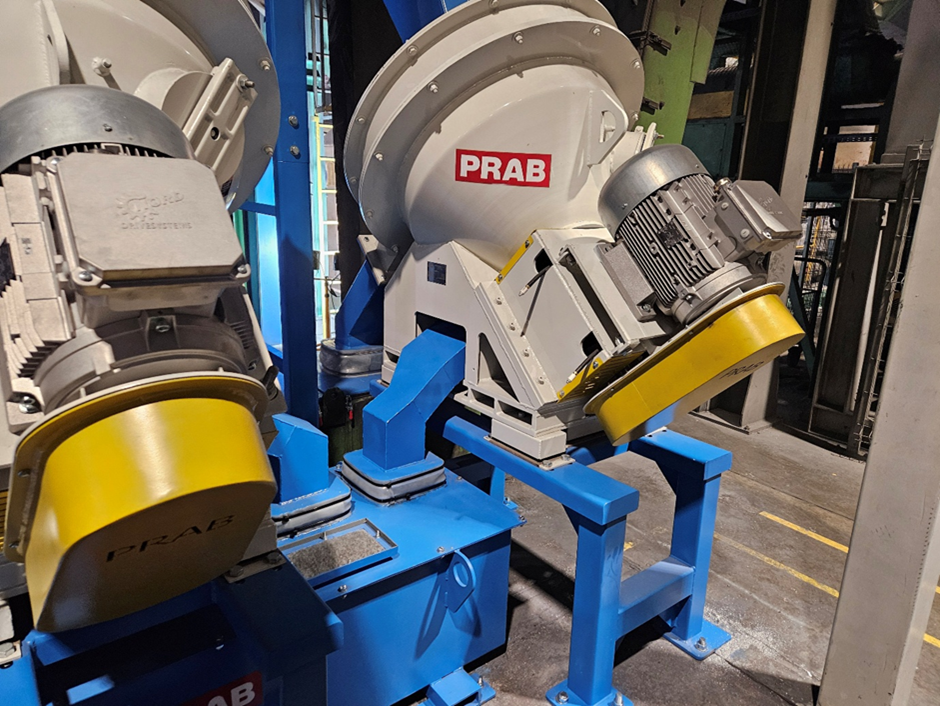
The implemented PRAB Crusher/Wringer system is a complete processing line for chips and coolant recovery, designed to recapture value that had previously been lost along with the waste.
Key elements of the implemented solution:
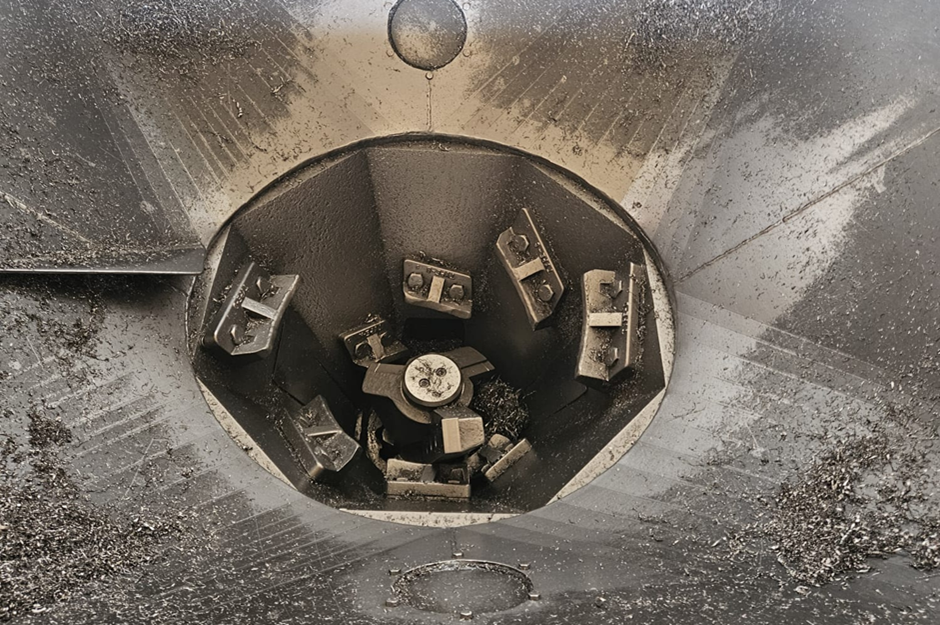
- An automatic high-level feeder loading long, tangled chips into a vertical-axis crusher, reducing them into free-flowing fragments.
- A steel-belt conveyor with a feeder to the centrifuge, lifting the chips to a tramp-metal separator that removes accidental contaminants.
- A Diagonal Axis Centrifuge — a centrifuge that separates oil from the chips at a centrifugal force of over 600 G.
- Pneumatic conveying of dry chips into a covered roll-off container.
- A settling tank capturing the recovered fluid and directing it to storage or a separate filtration system.
- A recirculating drag conveyor that returns fine particles to the chip flow and keeps the tank clean.
- An optional filtration module for the recovered oil, overflowing into a 1,100-liter tank.
The equipment was installed within a week of project approval, and the first signs of return on investment appeared after just a few weeks of operation.
Results
The implementation delivered results that the client summed up as follows:
“Recycling should be one of the first solutions considered when facing efficiency and cost problems.”
- €22,800 saved in 6 weeks on cutting oil alone — previously the plant purchased 12 drums of oil for around €24,800; after implementation, just 1 drum at around €2,070 was enough.
- Approximately €195,000 in annual savings across the full year, thanks to fluid recovery and reduced losses.
- An additional €22,000–€25,800 per year from selling dry scrap, which — thanks to better dewatering — achieves around 15% higher market value.
- Elimination of costly maintenance on the previous system, which required regular repairs and replacements.
- Reclaimed floor space in the production hall — removing 70 additional bins significantly improved organization and work ergonomics.
If your production line is experiencing similar problems, get in touch with us. We’ll help you select a solution tailored to the specifics of your facility and production process.