




Coolant is treated as a cheap consumable, but in reality it generates hidden costs in nearly every department. Given the current state of the energy market, this mistake is more costly than ever.
In this article, we break down what’s driving coolant-related costs right now, and highlight the operational practices and solutions that help metalworking plants regain control over them.
Why Are Costs Rising?
The sharpest factor is the energy crisis following the blockade of the Strait of Hormuz in early 2026, through which a significant share of the world’s oil and LNG trade previously flowed. The result has been higher oil and gas prices, and along with them, more expensive coolant concentrates, oils, and chemical additives (all petroleum-derived), higher rates, and shortages of key petrochemical feedstocks. This is pressure that will persist for quarters, not weeks.
It’s compounded by several structural forces: volatile tariffs and unstable supply chains, rising costs for carbide tooling (tungsten controlled mainly by China), tightening wastewater-discharge regulations, rising freshwater cost pressure, and a shortage of skilled labor. In this environment, every coolant-related inefficiency costs more than it used to.
The fluid itself is only 0.03–1% of a part’s cost, but if poorly managed, it triggers a cascade of secondary costs — tool wear, scrap parts, disposal fees, downtime, and compliance risk — that can far outweigh that value many times over.
How to Manage Coolant Well
The best plants treat coolant as a managed process asset, not a material replaced after it fails. In practice, this means: continuous concentration monitoring (refractometer or automated control), rigorous tramp-oil control, monitoring pH and bacteria, keeping the sump clean, and — most importantly — recycling instead of replacing. Recovering and reusing the fluid you already have is the biggest savings lever available.
PRAB’s Solutions
PRAB designs integrated fluid-management and chip-processing systems that create a closed loop: reducing consumption, extending fluid life, and recovering value from spent streams.
Guardian® — a centralized, turnkey coolant recycling system. It removes tramp oil, suspended solids, and bacteria, restoring coolant for reuse. It cuts new-coolant purchases by up to 75%, lowers disposal costs by around 90%, and its ozone module eliminates up to 99.9% of bacteria. Typical payback: 6–18 months.
Example: Cameron International reduced coolant purchases by 75% and hazardous-waste disposal by as much as 88%.
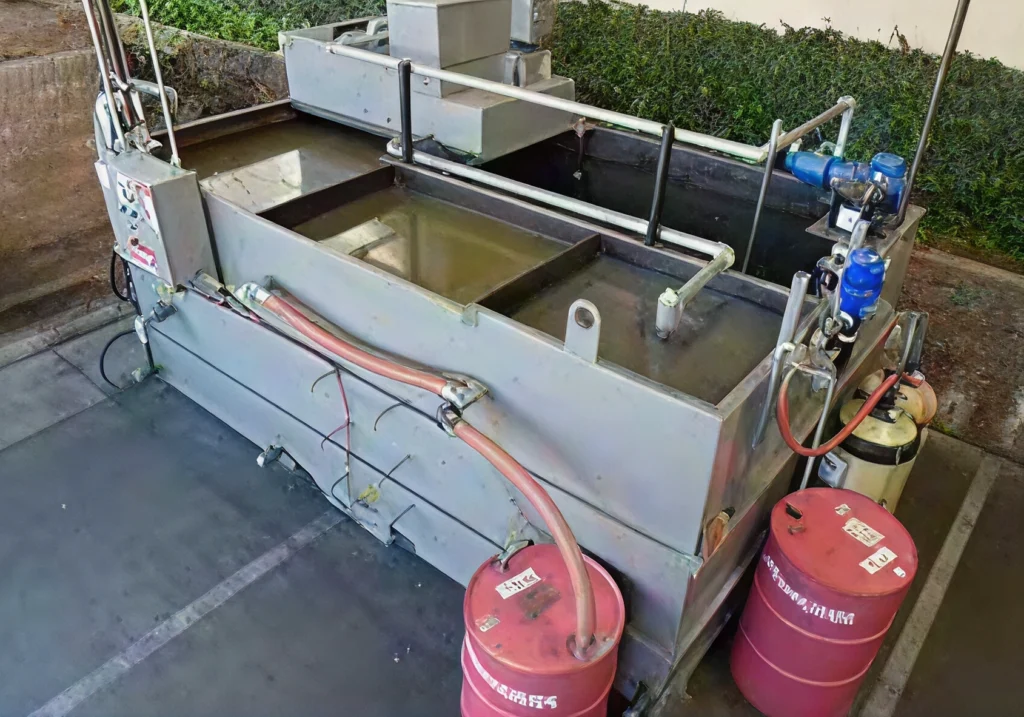
Mobile Coolant Recycler (MCR2/MCR6) — machine-level recovery, with no fixed infrastructure required. A single wheeled unit services multiple sumps, extending fluid life and reducing the number of disposal cycles.
An ideal starting point for smaller plants, with a clear upgrade path to a Guardian system.
Conveyors and chip processing keep chips and fines out of the sump, eliminating one of the leading causes of coolant degradation, and recover scrap value by removing residual coolant before haul-away.
Industrial wastewater treatment: vacuum evaporators, ultrafiltration, and reverse osmosis recover high-purity water for reuse, addressing both water cost and discharge compliance (including zero liquid discharge, ZLD, targets).
Why Act Now
Structural pressure on energy costs, tariffs, more expensive tooling, tightening regulations, and labor constraints — all of this amplifies the financial impact of poor coolant management. Plants that treat coolant as a managed asset gain longer tool life, better quality, lower disposal and water costs, and a lighter burden on their workforce.
In uncertain times, the winners are those who turn controllable costs into a competitive advantage — and coolant is one of the clearest such opportunities on the shop floor.