




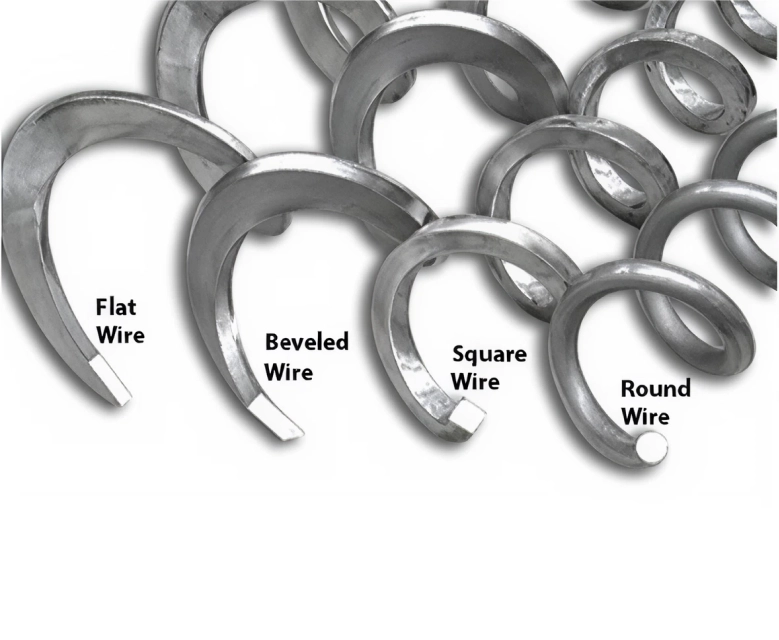
Choosing the right type, incline angle, rotation speed, and matching it to the material’s properties determine efficiency, energy consumption, and equipment lifespan. Find out what to watch for to avoid product degradation and premature failure.
As metalworking becomes increasingly automated and production schedules more demanding, manufacturers are evaluating conveyor systems not by purchase price alone, but by long-term reliability, integration capability, and total cost of ownership.
For plants handling machining scrap, chips, tangled turnings, stampings, fines, foundry scrap, or hot materials, conveyor design has a direct impact on plant-wide performance. As modernization projects are evaluated, the engineering and operational differences that separate basic-equipment vendors from complete-systems partners are becoming increasingly important.
The Problem With “Universal” Conveyors
Many vendors favor standardized equipment configurations designed to fit a wide range of industries and applications. This approach lowers upfront cost, but in the demanding metalworking environment it often leads to long-term operational trade-offs.
The most common problems plants face include:
- premature belt wear,
- material carryover and coolant leakage,
- frequent jams caused by long or tangled scrap,
- difficulty integrating with existing equipment,
- excessive service requirements,
- unstable scrap discharge,
- downtime caused by overloaded or undersized systems,
- limited support for future plant expansion.
In heavy industrial conditions, a conveyor is not an off-the-shelf product. Everything matters: the application, the type of scrap, coolant conditions, plant layout, discharge-point requirements, and production pace. A conveyor designed for fine aluminum particles behaves completely differently from one handling hot steel stampings, titanium chips, or wet cast-iron sludge. That’s why application-specific design matters more and more to modern plants.
Reliability Starts With Mechanical Design
One of the most important performance differentiators for an industrial conveyor is the drive-and-belt architecture itself.
Positive-drive steel-belt conveyors remain one of the most reliable solutions for handling heavy, abrasive, oily, or high-temperature scrap, because they eliminate slippage and maintain consistent throughput under demanding conditions. Unlike lighter friction-drive systems, structural steel-belt conveyors are engineered to withstand decades of operation on predictable service cycles.
PRAB engineers conveyor systems specifically for machining-scrap applications, including:
- wet machining scrap,
- stamping scrap,
- chips and tangled turnings,
- foundry scrap,
- hot materials,
- abrasive fractions,
- heavy-loading applications,
- centralized scrap-handling systems.
Rather than forcing plants to adapt their operations to the limitations of standard equipment, PRAB designs conveyors around the application itself.
Why Integration Into an Existing Plant Matters
Most manufacturers aren’t building new facilities from scratch — they’re modernizing existing ones while maintaining production continuity. That’s one of the biggest challenges of any modernization: integrating with existing equipment, plant layout, automation systems, coolant infrastructure, and production lines.
Many plants already operate a mix of older conveyors, machine tools, chip-processing systems, coolant systems, and loading equipment from different vendors. Replacing everything at once is rarely practical — which is where engineering experience becomes critical.
PRAB has built much of its reputation on integrating new conveyors into complex, operating facilities. This makes it possible to modernize a plant in stages, through:
- replacing worn-out conveyors,
- removing bottlenecks in scrap flow,
- expanding centralized systems,
- integrating coolant recovery,
- automating scrap loading,
- preparing for future automation initiatives.
For many plants, staged modernization limits operational risk while improving the return-on-investment timeline.
A Conveyor Should Support Both Scrap Processing and Fluid Recovery
Modern metalworking plants increasingly view scrap not as waste, but as a resource stream to be recovered. This completely changes the conveyor’s role. Instead of simply moving scrap to a container, advanced systems become the foundation of integrated material-recovery setups.
Conveyors can feed material into, among others: chip crushers, shredders, wringers, centrifuges, briquetters, coolant recycling systems, loading systems, and industrial wastewater treatment installations.
This integrated approach helps plants increase scrap resale value, recover process fluids for reuse, lower coolant purchase and disposal costs, improve cleanliness, reduce manual labor, and support sustainability goals.
Conveyor Durability Affects Total Cost of Ownership (TCO)
When evaluating a conveyor by purchase price alone, manufacturers often underestimate lifecycle operating costs. Industrial conveyors operate under harsh conditions: abrasion, high temperatures, coolant exposure, shock loads, continuous operation, high scrap volumes, and corrosive environments.
In this kind of environment, cheaper systems may require more frequent belt replacement, greater service labor, longer downtime, structural repairs, component replacement, and earlier full-system replacement. Long-term durability significantly changes the economics across the whole lifecycle.
Many PRAB systems remain operational for decades because they’re engineered specifically for demanding industrial applications. That’s why more and more plant managers evaluate conveyors based on lifecycle cost, ease of service, uptime, maintenance simplicity, parts availability, integration flexibility, and long-term support — not just upfront cost.
Engineering Support and Service Are Often Underestimated
A conveyor project is rarely just an equipment purchase. It often involves layout design, electrical and controls integration, safety considerations, installation planning, startup coordination, service training, and planning for future scalability.
PRAB stands out through a combination of application-specific engineering expertise, U.S.-based manufacturing, experience integrating into existing plants, 24/7 technical support, long-term parts availability, a large installed base, and the ability to deliver integrated systems.
How to Choose the Right Partner
The best solution is rarely the cheapest standard product. It’s a system that reliably supports production goals over the long term and integrates effectively into plant operations.
When evaluating a conveyor modernization, it’s worth considering:
- Material properties: chip size and shape, bulk density, abrasiveness, moisture/coolant content, temperature levels.
- Operating requirements: throughput volume, duty cycle, automation requirements, space constraints, service accessibility.
- Long-term factors: expansion potential, integration with future systems, coolant-recovery goals, labor reduction, lifecycle operating costs.
As production becomes increasingly automated and resource-efficient, conveyors are no longer just material-handling equipment — they are becoming critical infrastructure supporting the performance of the entire plant.
Summary
Industrial conveyor systems have a direct impact on production efficiency, maintenance costs, safety, scrap recovery, and operational availability. Plants that prioritize application-specific design, long-term durability, and integration capability generally achieve significantly better outcomes than those relying on one-size-fits-all solutions.
With decades of experience engineering conveyors for demanding metalworking applications, PRAB consistently focuses on engineered systems built for reliability, ease of service, and long-term plant performance.